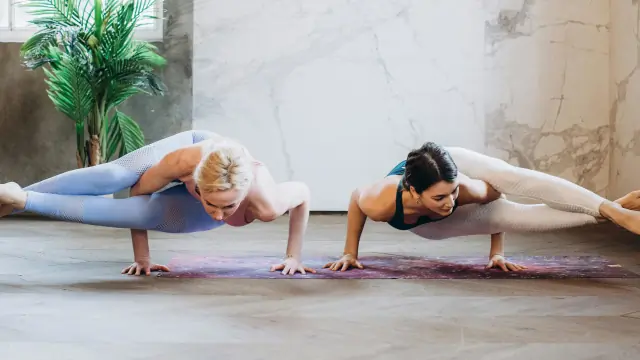
Beyond the Basics: Taking Your Balance to the Next Level
You can stand on one foot just fine, but real balance mastery means moving with control and exploring your edges.
Lees meer…

Getting injured is frustrating, especially when yoga is part of your routine. Your first instinct might be to push through or to stop practicing completely until you’re healed. Both approaches are wrong. The smart move is continuing to practice while respecting your injury’s limitations. This requires honesty, patience, and a willingness to modify everything you thought you knew about your practice.
First, get a proper diagnosis. Don’t guess what’s wrong based on internet research or what happened to someone else. See a doctor or physical therapist who understands movement. You need to know what you’re dealing with, what movements are safe, and what will aggravate the injury. Practicing blind with an injury is how you turn a minor problem into a chronic one. Once you know what you’re working with, you can make intelligent decisions about modification.
Pain is not your friend in this context. There’s a difference between the discomfort of stretching tight muscles and the sharp or achy pain of an injured area being stressed. If a movement causes pain in your injured area, stop doing it. Not “breathe through it” or “it’ll loosen up.” Just stop. Pain is your body’s warning system telling you that tissue is being damaged. Ignoring it because you want to complete a pose is stupid and counterproductive.
Focus on what you can do rather than mourning what you can’t. Shoulder injury? Your legs still work. Practice standing poses and focus on lower body strength and hip flexibility. Knee problem? Your upper body is fine. Work on arm balances, core strength, and seated stretches. There’s always something you can practice safely. This maintains your connection to yoga and keeps the rest of your body strong while the injured area heals.
Modify aggressively and without ego. Props aren’t just for beginners. Blocks, straps, bolsters, and walls become your best tools when working around an injury. Can’t do a full forward fold because of a hamstring strain? Use a strap. Can’t bear weight on your wrist? Practice on your forearms. Can’t do chaturanga? Lower your knees. Every pose has modifications, and using them intelligently is what allows you to keep practicing.
Restorative and gentle practices become more important during injury recovery. This is when yin yoga, gentle flows, and supported poses prove their worth. These practices maintain flexibility and circulation without stressing injured tissues. They also help with the mental frustration of being injured. You’re still doing yoga. You’re still on your mat. Just in a different way temporarily.
Rebuilding after injury requires progressive loading. Once you’re cleared to start using the injured area again, don’t jump back to where you were before. Start at maybe 50 percent intensity and duration. If that goes well for a week, bump it up to 60 percent. Gradual increases allow tissues to adapt and strengthen without re-injury. Rushing this process is how people get stuck in injury cycles where they heal partially, do too much, and get hurt again.
Listen to your body the day after practice, not just during. Sometimes an activity feels fine while you’re doing it but causes pain or swelling later. If you wake up the next day and your injury feels worse, you overdid it. Scale back. This feedback loop is crucial for finding the right level of activity during recovery.
Accept that recovery takes time. Tissue healing isn’t linear. Some days will feel better than others. The timeline your doctor gave you is an estimate, not a guarantee. Getting frustrated and pushing harder doesn’t speed healing. It delays it. The fastest way back to full practice is respecting the process and not trying to rush it.
Your practice will come back. Maybe not exactly the same, and maybe with some permanent modifications, but it will come back if you’re smart about the recovery process. Treat this as an opportunity to develop patience and body awareness, not as a catastrophe.
You can stand on one foot just fine, but real balance mastery means moving with control and exploring your edges.
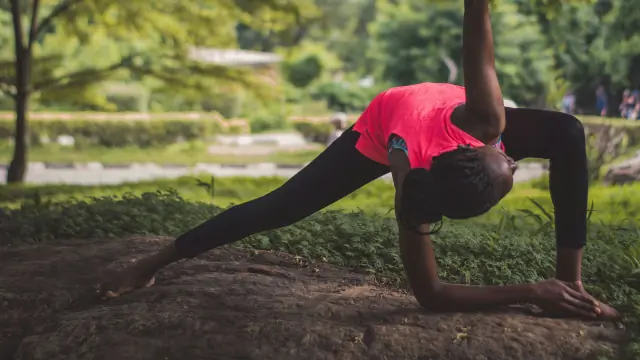
If you’re already fit but tight from running, lifting, or cycling, your yoga practice needs a different focus than most classes offer.
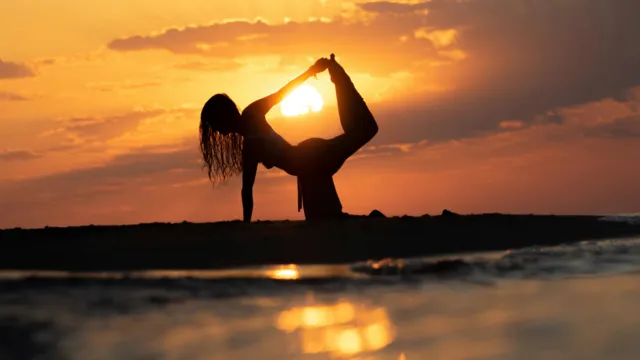
There’s a reason ancient yogis practiced at sunrise on an empty stomach, and it has nothing to do with tradition for tradition’s sake.