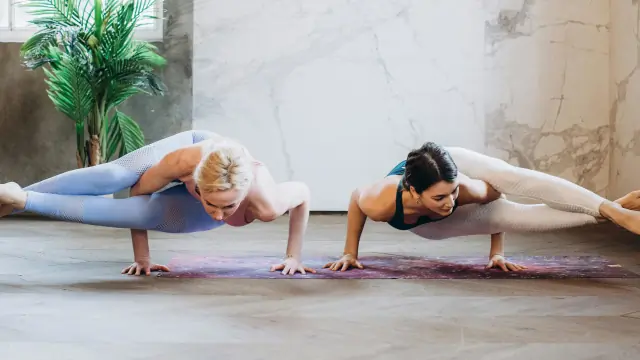
Beyond the Basics: Taking Your Balance to the Next Level
You can stand on one foot just fine, but real balance mastery means moving with control and exploring your edges.
Lees meer…
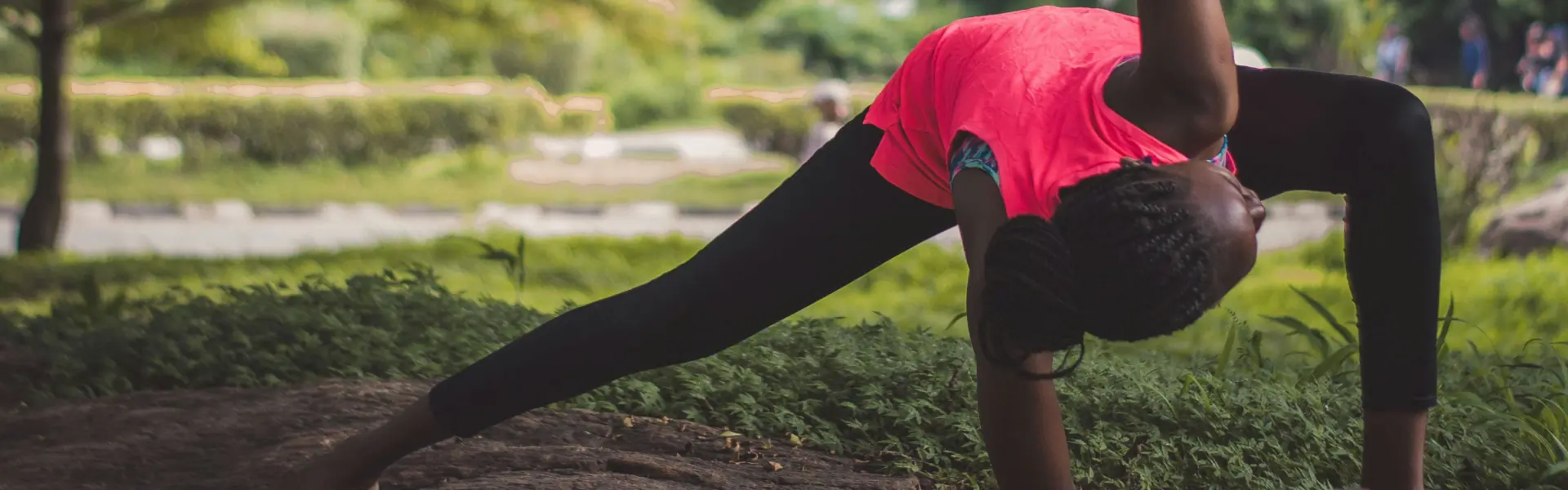
Athletes come to yoga for recovery and flexibility, then get frustrated when classes don’t address what they actually need. You don’t need more cardio or strength work. You’re already doing plenty of that. What you need is targeted mobility work, proper recovery sessions, and smart integration with your main training. Generic flow classes often miss the mark entirely.
Your tight spots are predictable based on your sport. Runners have tight hip flexors, hamstrings, and calves. Cyclists have locked-up hips and rounded shoulders. Lifters have tight chest, shoulders, and limited thoracic mobility. Skip the full-body approach and zero in on what’s actually limiting you. Spend more time in poses that address your specific restrictions.
Yin-style long holds work better for athletic recovery than active flows. After a hard training session, your muscles are already fatigued. More active movement just adds stress. What you need is gentle, sustained stretching that affects your fascia and connective tissue. Hold pigeon for four minutes per side. Sit in a deep squat for five minutes. Let gravity do the work while you breathe and relax.
Timing matters significantly. Yoga right before heavy training can reduce power output and make you more injury-prone. Save deep stretching for after training or on rest days. If you want to do yoga before training, keep it dynamic and short. Just enough to warm up and improve range of motion without fatiguing muscles you’re about to use.
Hip mobility is usually the limiting factor for most athletes. Lizard pose, pigeon, frog pose, and deep lunges should be staples. Your hips affect everything from running stride to squat depth to injury risk. Dedicated hip opening sessions twice a week will improve your athletic performance more than any amount of warrior pose flows.
Shoulder and thoracic spine mobility matter more than you realize. If you lift weights, your chest and front delts are probably tight and pulling your shoulders forward. If you cycle, you’re stuck in that hunched position for hours. Thread the needle, cow face arms, and supported fish pose on a bolster all create space in your upper body and improve your posture and breathing.
Don’t make yoga another thing you push hard at. You already train hard. Yoga’s role in your life is balance and recovery, not another competition. If you finish a yoga session feeling exhausted, you’re doing it wrong. You should feel more mobile, more relaxed, and ready for your next training session.
One or two focused 30-minute sessions per week beats trying to fit in hour-long classes that don’t address your needs. Build your own sequences around your tight spots, use props liberally, and treat it as essential maintenance rather than optional extra work.
You can stand on one foot just fine, but real balance mastery means moving with control and exploring your edges.
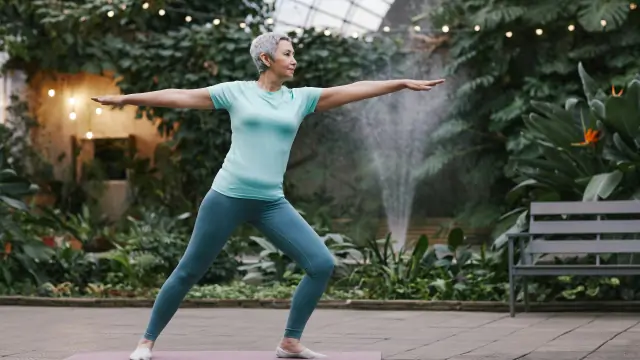
An injury doesn’t mean stopping yoga entirely, but it does mean getting smarter about what you do and don’t do on the mat.
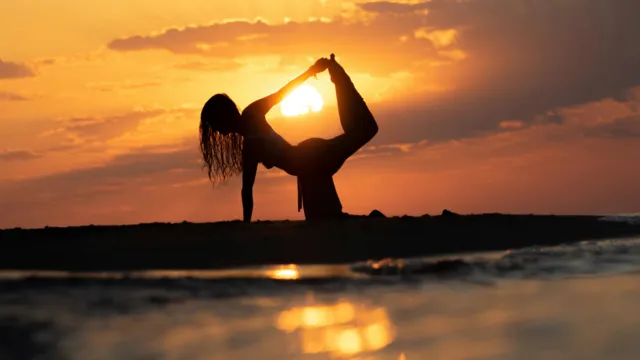
There’s a reason ancient yogis practiced at sunrise on an empty stomach, and it has nothing to do with tradition for tradition’s sake.