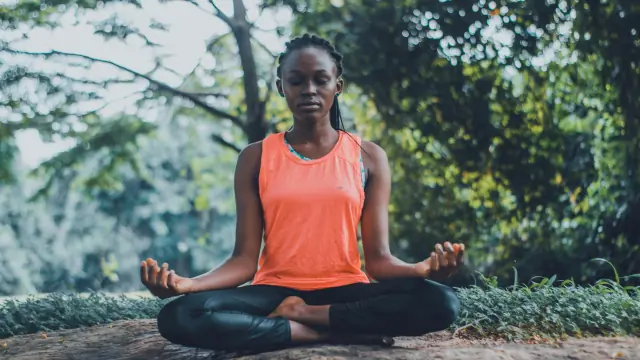
Why Your Breath Matters More Than Perfect Poses
Learning to breathe properly during yoga will transform your practice more than nailing that complicated pose ever will.
Lees meer…
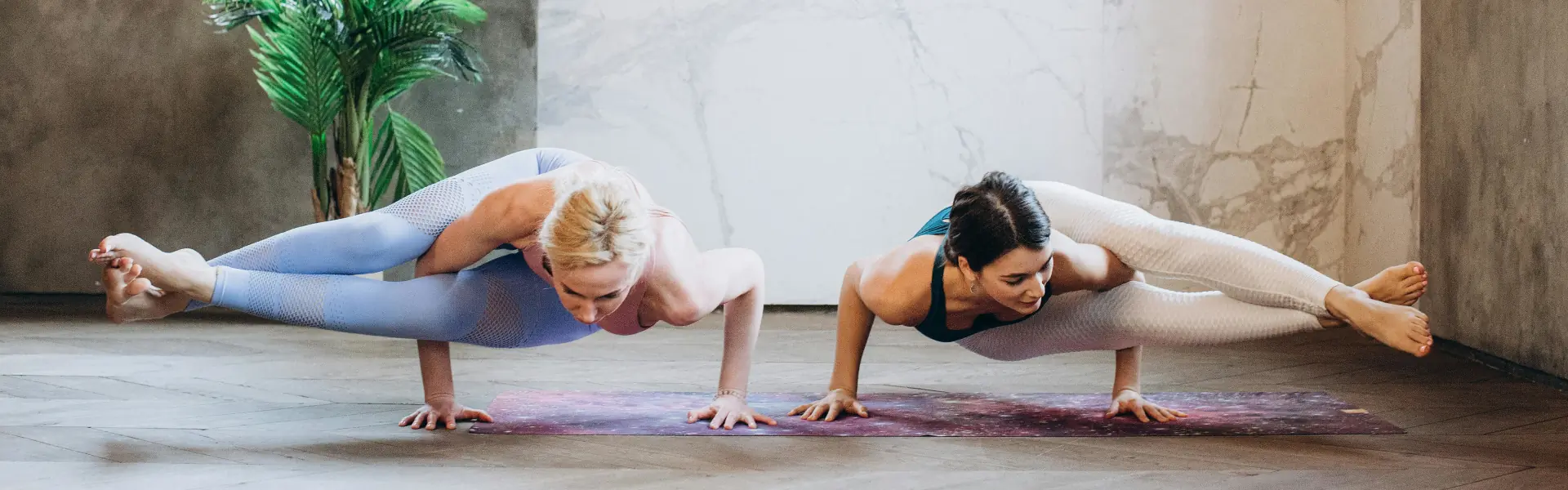
Standing in tree pose for a minute without wobbling is great, but if that’s where your balance practice stops, you’re leaving serious capability on the table. Intermediate balance work is about transitions, about moving in and out of poses with control, and about finding stability in positions that challenge multiple planes of movement at once. This is where balance becomes genuinely useful off the mat.
Start working with slow, controlled transitions between balance poses. The movement between poses is where your balance system really gets tested. Try this: from mountain pose, shift into tree pose over a count of five seconds, hold for three breaths, then lower back down just as slowly. The lowering is often harder than the lifting. This deliberate pace removes momentum as a crutch and forces your stabilizing muscles to do real work.
Closed-chain balance poses are your next frontier. These are poses where both feet stay on the ground but your base of support is compromised. Eagle pose is the classic example. Your legs are twisted together, your center of gravity shifts, and your brain has to recalculate everything. These poses build balance in ways that single-leg poses don’t because they challenge your body’s spatial awareness differently.
Start incorporating balance work with your eyes closed more regularly. If you can hold dancer’s pose with eyes open, try it with eyes closed for even just five seconds. The instability you feel is productive. You’re training your proprioceptive system to work independently, which dramatically improves your overall balance capacity. Just be near a wall when you first try this.
Dynamic balance drills will push you further. Set up a sequence: warrior three to standing splits to half moon, all on the same leg without touching down. Or try crow pose to headstand to crow pose. These combinations require strength, yes, but the real challenge is maintaining equilibrium while your body configuration keeps changing. Film yourself doing these. You’ll be surprised how much you’re moving to stay stable.
Challenge your balance on unstable surfaces if you have access to them. A folded blanket, a balance pad, or even practicing on grass instead of your sticky mat changes everything. Your feet and ankles have to work harder to find stability, which strengthens all the small muscles that keep you upright. This kind of training has real-world benefits for ankle stability and injury prevention.
The ultimate balance skill is learning to fall with control. Practice intentionally coming out of poses in unusual ways. From warrior three, can you slowly windmill your arms and rotate into a side plank? Can you lower from crow pose into a controlled forward fold? This isn’t about perfecting poses anymore. It’s about owning your body in space no matter what position you find yourself in.
Keep pushing your edges and stay curious about what your balance system can learn.
Learning to breathe properly during yoga will transform your practice more than nailing that complicated pose ever will.
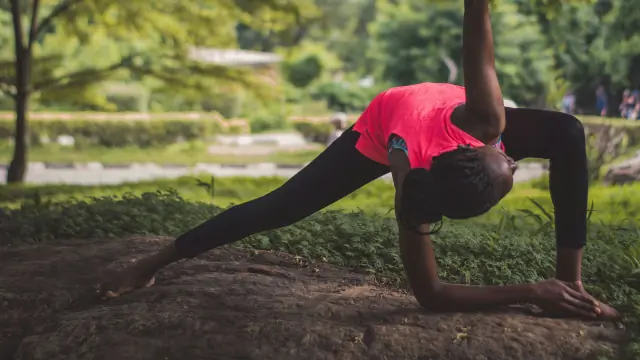
If you’re already fit but tight from running, lifting, or cycling, your yoga practice needs a different focus than most classes offer.
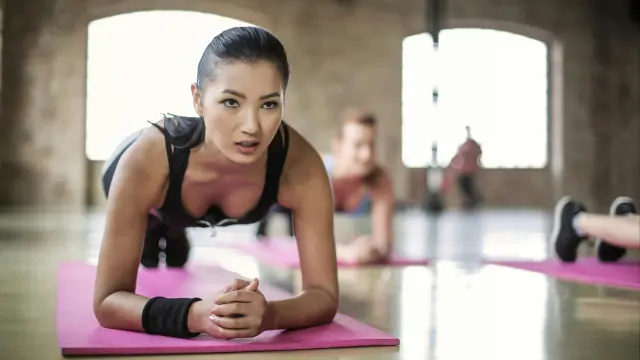
Your core does way more than help you hold plank, and training it properly transforms every pose you do.