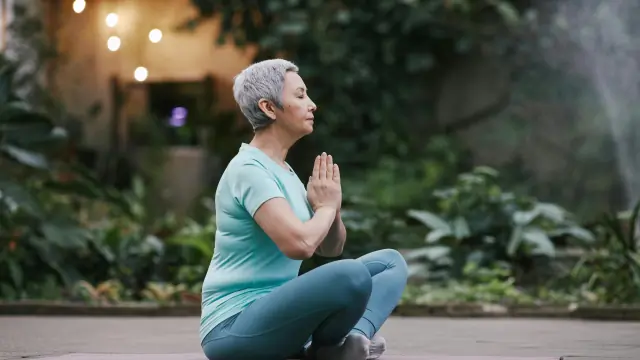
The Mental Game of Dealing With Frustration in Your Practice
Progress stalls, poses regress, and motivation disappears, here’s how to handle it without quitting.
Lees meer…

The standard advice for building a yoga habit is useless if your life is unpredictable. Practice at the same time every day, they say. Create a dedicated space. Follow a routine. Great, except your work schedule changes weekly, you travel constantly, or you’re juggling responsibilities that don’t fit into neat blocks. Here’s the reality: you can build a solid practice with an irregular schedule, but you need to abandon the idea that consistency means sameness.
The key is shifting from time-based consistency to frequency-based consistency. Instead of “I practice every day at 6am,” your rule becomes “I practice six days a week, whenever I can fit it in.” Some days that’s 6am. Other days it’s 9pm. Tuesday might give you an hour, Thursday might give you fifteen minutes. That’s fine. What matters is that you’re on the mat regularly, not that every session looks identical. Your body adapts to regular practice, not regular timing.
Short practices are legitimate practices. This might be the most important thing to understand. Fifteen minutes of focused yoga is infinitely better than zero minutes of yoga. When your schedule is tight, don’t skip practice because you can’t do your full routine. Do three sun salutations and some hip openers. Do a five-minute breathing exercise. Do legs up the wall for ten minutes before bed. These abbreviated sessions maintain your connection to the practice and keep your body from losing what you’ve built.
Keep your setup minimal and portable. If you need to roll out a mat, arrange props, light candles, and queue up the perfect playlist, you’ve created friction that makes practice less likely when time is tight. Learn sequences you can do in whatever space you have available. A hotel room. Your office. A park. The less your practice depends on specific conditions, the more resilient it becomes against schedule chaos.
Anchor your practice to something that already happens regularly, not to a specific time. After you shower. Before dinner. When you first get home. Right after you put the kids to bed. These anchors work better than clock times because they’re relative to your actual life rhythm. Even if your schedule shifts, the anchor point still exists. You might shower at different times each day, but you always shower, so that’s a reliable trigger.
Weekend sessions can be your anchor practices. If weekdays are completely unpredictable, make Saturday or Sunday morning non-negotiable. This is when you do your longer, more complete practice. It gives you a weekly reset and maintains your baseline. The weekday practices can be shorter and more flexible because you have this solid foundation keeping you connected to your practice.
Stop viewing missed days as failure. With an irregular schedule, some weeks will be better than others. You might hit six practices one week and three the next. That’s not falling off the wagon. That’s adapting to reality. The practice isn’t ruined because it’s imperfect. Guilt and self-judgment about inconsistency do more damage than the actual inconsistency. Show up when you can, then show up again the next chance you get.
Track your practice but keep it simple. A checkmark on a calendar for days you practiced, regardless of duration. Over time you’ll see the pattern. You’re practicing more than you think you are. This visible record helps you see that despite the chaos, you’re maintaining the habit. It also helps you identify truly dead periods where you need to problem-solve rather than just feeling vaguely guilty.
Your practice doesn’t need to look like anyone else’s. It needs to work with your actual life, not some idealized version of your life. Build the habit around the reality you’re living in, and it’ll stick. Try to force it into a rigid structure that doesn’t fit, and it’ll collapse the first time things get hectic.
Progress stalls, poses regress, and motivation disappears, here’s how to handle it without quitting.
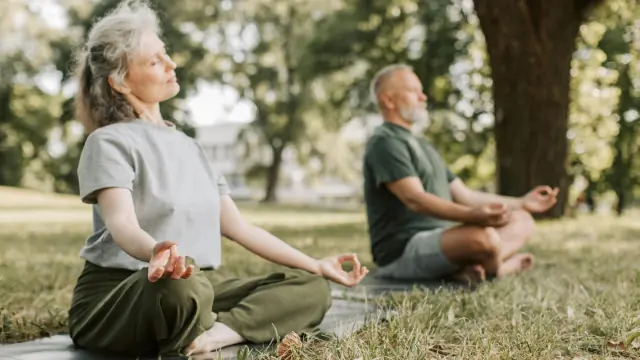
Couples yoga can strengthen your relationship or turn into a frustrating mess, depending on how you approach it.

There’s a reason ancient yogis practiced at sunrise on an empty stomach, and it has nothing to do with tradition for tradition’s sake.