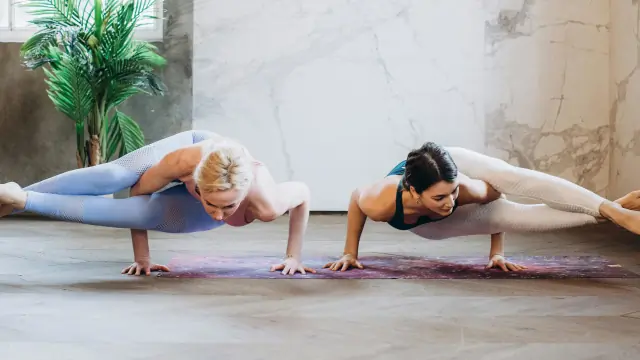
Beyond the Basics: Taking Your Balance to the Next Level
You can stand on one foot just fine, but real balance mastery means moving with control and exploring your edges.
Lees meer…
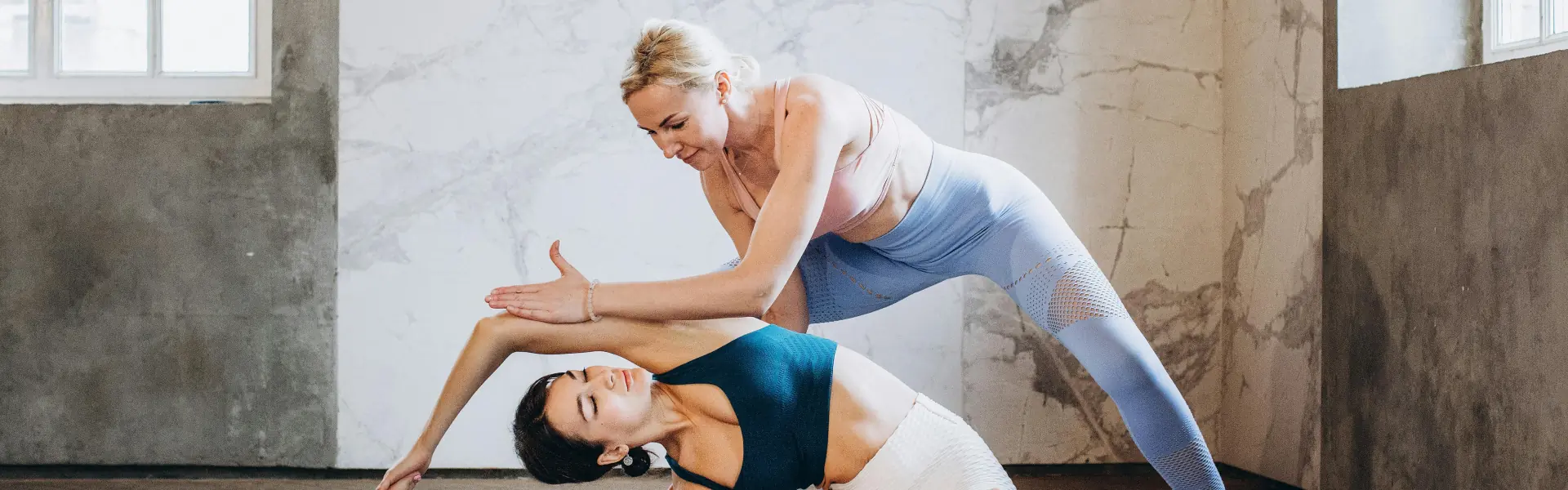
Advanced poses look impossible until you understand they’re not single movements. They’re combinations of strength, flexibility, balance, and body awareness that you can develop piece by piece. Trying to jump straight into crow pose or king pigeon without building the prerequisites is how people get hurt and discouraged. The smart approach is reverse engineering the pose into its components, then systematically working on each one until they come together.
Start by analyzing what the pose actually requires. Take headstand as an example. You need shoulder stability, core strength, hamstring flexibility to pike up, balance, and the mental calm to be upside down. Each of these is trainable separately. Dolphin pose builds shoulder strength. Boat pose works your core. Forward folds develop the pike. Downward dog gets you comfortable with mild inversion. Practice these components for weeks or months, and suddenly headstand becomes achievable rather than terrifying.
Use easier variations to build the movement pattern. Most advanced poses have scaled-down versions that teach your body the shape without the full intensity. Want to work toward wheel pose? Start with bridge. Want crow pose? Begin with a low squat and practice shifting your weight forward onto your hands with your feet still on the ground. These variations aren’t lesser versions of the real thing. They’re essential training steps that prepare your body for the full expression.
Strength is usually the limiting factor more than flexibility. People assume they’re too inflexible for advanced poses, but often they just lack the strength to control their body in those positions. You might have the hip flexibility for flying pigeon, but without the core and hip flexor strength to lift your leg and hold it there, flexibility is irrelevant. Identify which muscles need to be stronger and work them deliberately. Planks, leg lifts, and holding challenging poses longer all build the strength foundation advanced work requires.
Break your practice sessions into skill-building blocks. Dedicate ten minutes to shoulder stability work. Spend five minutes on wrist conditioning. Practice weight shifts and balance drills for another ten minutes. You’re not trying to achieve the advanced pose yet. You’re building capacity in the individual skills. Over time, these separate abilities merge into the coordination needed for the full pose.
Film yourself regularly. What you think you’re doing and what you’re actually doing are often completely different. Video shows you exactly where your alignment is off, where you’re compensating, and what specific aspect needs work. Watch practitioners who can do the pose you’re working toward. Notice the details of how they position their body. Compare that to your own attempts and identify the gaps.
Fail productively. When you attempt an advanced pose and can’t hold it or can’t get into it, pay attention to exactly where it breaks down. Do you collapse at a specific point? Does one side feel completely different than the other? Does your breath get ragged at a certain moment? These failure points tell you precisely what to work on next. They’re not signs you can’t do it. They’re diagnostic information showing you what needs more development.
Set realistic timelines measured in months, not weeks. Some poses take years to achieve safely. That’s not because you’re inadequate. It’s because your body needs time to adapt. Connective tissue strengthens slowly. Neuromuscular patterns take repetition to ingrain. Rushing this process leads to injury or sloppy execution where you technically achieve the pose but without real control or stability.
Track micro-progress to stay motivated. You won’t go from unable to do crow pose to holding it for a minute overnight. But you might go from not getting your feet off the ground at all to hovering for one second. Then three seconds. Then five. These small improvements are real progress. Celebrate them. They prove the work is paying off and keep you moving forward when the ultimate goal still seems far away.
The pose will come when your body is ready. Keep building the components, trust the process, and don’t skip steps trying to rush the outcome.
You can stand on one foot just fine, but real balance mastery means moving with control and exploring your edges.
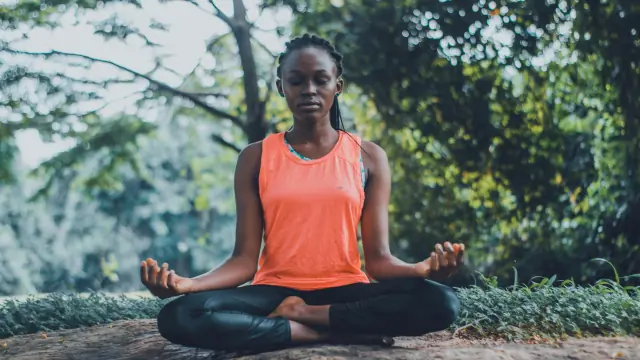
Learning to breathe properly during yoga will transform your practice more than nailing that complicated pose ever will.
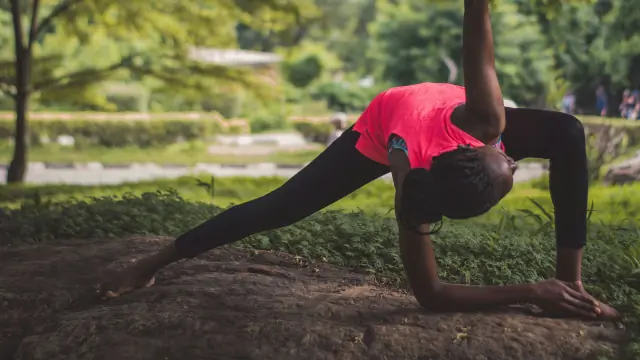
If you’re already fit but tight from running, lifting, or cycling, your yoga practice needs a different focus than most classes offer.